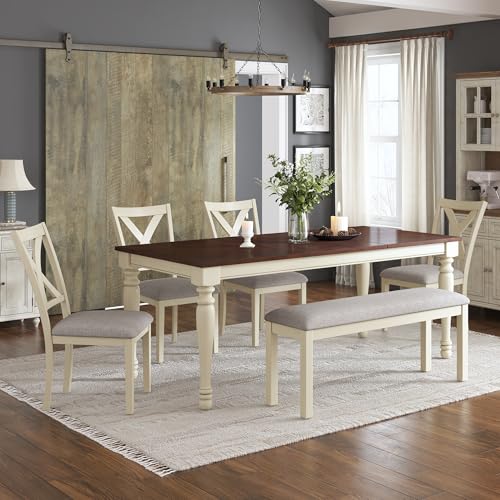
Dining Room Table with Bench and 4 Chairs: The Complete Guide
Everything you need to know about choosing a dining table with bench and four chairs — from sizing and layout to materials, comfort, and long-term durability.
A dining room table with a bench and four chairs is one of the most practical seating arrangements for modern homes. It combines the formal, supportive feel of individual chairs with the casual, space-efficient comfort of a shared bench. This mix works especially well for families, open-plan living areas, and rooms where flexibility matters more than rigid symmetry. Before you commit to a set, it helps to understand how bench seating changes the way a table functions — and where it can quietly cause problems if the proportions are wrong.
This guide walks through the key decisions: how many people the setup actually seats, which table dimensions support a bench on one side, how to choose between backless and backed benches, and what materials hold up best over years of daily use. By the end, you should be able to judge whether a dining room table with bench and 4 chairs fits your room, your household, and your routine — and know exactly what to check before ordering.
How Many People Does a Bench and 4 Chairs Seat?
The honest answer is "it depends on the bench length and table size," but there is a reliable rule of thumb. An adult needs roughly 24 inches of bench width to eat comfortably without elbow collisions. A standard 60-inch rectangular table supports a bench of about 48 to 54 inches, which seats two adults comfortably and three smaller diners or children. Combined with four chairs — two on the opposite long side and one at each end — the setup seats six.
If you want the bench to seat three adults regularly, aim for a 72-inch table and a bench of at least 60 inches. This is where many buyers misjudge the purchase: a bench that looks generous in the showroom can feel tight once three people sit down with plates and glasses. Measure your intended bench length against your household's actual seating habits before deciding. For layouts where the bench sits on one side only, a dining table with bench on one side arrangement is the most common and easiest to plan around.
Table Size and Seating Capacity at a Glance
Use the table below to match table length to realistic seating. The "tier" column refers to the build category of the set, not to any numeric figure — it helps you compare construction quality and intended use across the market.
| Table Length | Bench Seats | Chairs | Total Seated | Typical Tier | Best For |
|---|---|---|---|---|---|
| 48 inches | 2 | 4 | 5–6 | Entry-level to mid-range | Small dining rooms, couples, apartments |
| 60 inches | 2–3 | 4 | 6 | Mid-range | Most family homes, everyday dining |
| 72 inches | 3 | 4 | 7 | Mid-range to premium | Families of five to six, entertaining |
| 84 inches and above | 3–4 | 4 | 7–8 | Premium to high-end tier | Large dining rooms, formal hosting |
Tier descriptors reflect relative market positioning and build intent. They are independent of any specific figure and remain useful regardless of changing market conditions.
Why Choose a Bench Instead of All Chairs?
Bench seating changes both the physical and social character of a dining room. The practical advantages are clear: a bench tucks fully under the table, reclaiming floor space in narrow rooms; it seats children side by side without the gaps that individual chairs create; and it visually lowers the seating line, which makes a room feel more open. Many buyers also find that a bench encourages a more relaxed, conversational atmosphere than a row of identical chairs.
The trade-offs are equally real. A backless bench offers no lumbar support, so it suits meals better than long after-dinner conversations. Getting in and out requires sliding rather than pushing back, which can be awkward for older guests or anyone with mobility limitations. For these reasons, the most successful setups pair a bench with supportive chairs rather than replacing all seating with benches. If you want a visual reference for how this balance looks in practice, a dining table with bench and 4 chairs is the classic configuration, while a dining table with bench and chairs set gives you a coordinated look out of the box.
Backless Bench vs. Bench with Back: Which Fits Your Room?
The single biggest comfort decision is whether the bench has a backrest. A backless bench is the more flexible option — it slides completely under the table, works on either side of the table, and can be moved to a hallway or entryway when not in use. It is also the better choice for small rooms because it adds no visual height. The downside is reduced comfort for longer meals.
A bench with a back behaves more like a sofa seat. It offers proper support, which matters for households that linger at the table, but it cannot tuck fully under the table and it fixes the bench to one orientation. If you want the comfort of a backed bench without losing flexibility, a dining table bench with back paired with four chairs is a strong middle path. For rooms where the bench runs along a wall, a dining room corner bench or banquette can turn an awkward corner into usable seating — but measure carefully, because corner units are unforgiving once installed.
Layout Options for Bench and Chair Combinations
Where you place the bench determines how the room flows. The most common layout puts the bench along one long side and two chairs on the opposite side, with one chair at each end. This gives every diner a clear path to the table and keeps the bench from blocking walkways. It is also the layout most tolerant of imperfect room dimensions.
A second option places the bench along a wall or window and pulls the table close, freeing the opposite side for chairs. This is efficient in narrow rooms but makes the bench side harder to access for anyone seated in the middle. A third option — increasingly popular in open-plan homes — uses the bench as a soft divider between the dining zone and the living area. If you are planning around an existing sofa arrangement, browse dining room sets with a bench seat to see how different configurations handle the same footprint. And if the room is genuinely tight, a dining table with bench for small spaces is designed specifically to minimize the seating footprint.
Materials: What Holds Up to Daily Family Use
A dining set is a long-term investment, and the material determines how well it survives spills, sunlight, and daily traffic. Solid hardwood — oak, maple, acacia, or rubberwood — remains the most durable choice for the table and bench frame. It can be refinished, and a quality hardwood set will outlast several replacements of a lighter alternative. Look for reinforced joinery at the bench corners, since that is where stress concentrates when people slide in and out.
Metal frames with wood or upholstered seats are a practical middle path: they handle load well and suit modern interiors, though painted finishes can chip over time. Upholstered benches add comfort but demand more cleaning care in homes with young children. If you prefer a softer, more furnished look, a dining table with bench and upholstered chairs balances comfort with a more formal appearance. For farmhouse-style interiors, a farmhouse dining table with bench and chairs typically uses thicker timber sections, which adds stability but also weight — worth checking before you plan the delivery route.
Whatever material you choose, confirm that the table has a finish appropriate to its intended location, and check the assembly requirements in advance. Our delivery and assembly guide explains what to expect for larger furniture pieces and how to prepare access to the room before the set arrives.
Common Configurations and Who They Suit
The "bench plus four chairs" formula covers a wide range of actual products, and the differences matter more than the label suggests. A dining table set for 4 with bench is the compact version, usually seating four to five people and fitting neatly into a smaller room. A dining table set for 6 with bench is the family standard, with enough length for a bench that seats two or three adults. Larger households should look at a dining table set for 8 with bench, which typically combines a longer table with a bench on one side and chairs around the remainder.
Shape also matters. Rectangular tables are the most efficient for bench seating because a straight bench aligns naturally with a straight edge. Round tables can work with a curved bench, but the geometry leaves gaps and is harder to plan. If your room has an unusual footprint, a dining table corner set or a dining room table with banquette seating may use the space more efficiently than a standard rectangle. For households that expect to host occasionally, an extendable dining table with bench and chairs adds capacity without permanently occupying more floor area.
Bench Seating in Small Dining Rooms
Bench seating is often recommended for small dining rooms, and for good reason — but the benefit depends on the bench type. A backless bench that tucks fully under the table reduces the effective floor footprint to roughly the table's own dimensions. A backed bench or a banquette does the opposite: it permanently occupies floor space and can make a small room feel tighter. If floor area is your constraint, prioritize a backless bench and a table that is not wider than necessary for your household.
Clearance around the table is the other half of the equation. You need enough room behind the chairs to push back and stand, and enough room in front of the bench for people to slide in. In practice, this means leaving at least 30 to 36 inches between the table edge and the nearest wall or piece of furniture on the chair side. A dining table with 2 chairs and a bench is a useful reference point for the minimum viable setup in a compact room, and a dining set with bench often includes dimensions that make this easier to check before ordering.
Matching the Set to Your Interior Style
The bench-and-chair combination adapts to almost any interior style, which is part of its appeal. In a modern room, a slim metal-framed table with a backless wood bench and four matching chairs keeps the look light. In a farmhouse or rustic interior, a heavier timber table with a backed bench and spindle chairs reads as intentional and warm. In a coastal or Scandinavian-inspired space, pale wood and simple lines work best.
The key is consistency in finish and proportion rather than identical pieces. A bench that is noticeably deeper or taller than the chairs will look mismatched even if the materials match. If you are building the set piece by piece, start with the table and bench as a pair, then choose chairs that match the seat height and timber tone. A dining table and bench set removes much of this guesswork, and a farmhouse dining set with bench and chairs is a straightforward way to get a cohesive rustic look.
Pre-Purchase Checklist
Before ordering, work through these checks in order. They catch the mistakes that are hardest to fix after delivery.
- Measure the room, not just the table. Confirm clearance for chair pull-out and bench access on all sides.
- Confirm the bench length against real seating. Two adults need roughly 48 inches; three need roughly 60 inches.
- Decide on backrest. Backless for flexibility and small rooms; backed for comfort and longer meals.
- Check seat height compatibility. Bench and chair seat heights should be close so diners sit at a consistent level.
- Review the frame and joinery. Reinforced corners and solid hardwood frames last longer under daily use.
- Plan the delivery route. Large tables and benches may need doorway and stair measurements in advance.
- Confirm assembly requirements. Some sets arrive fully assembled; others require tools and two people.
If you are still comparing formats, a dining table with bench and chairs overview can help you narrow the shortlist before you commit to a specific size. Households that want a bench on both sides may prefer a dining table with bench and two chairs configuration, which trades chair count for additional bench seating.
Frequently Asked Questions
What size dining room table fits a bench and 4 chairs?
For a bench and four chairs, a rectangular table between 60 and 72 inches long is the most versatile choice. This length gives the bench enough room to seat two or three people along one side while four chairs sit comfortably on the opposite side and at the heads of the table.
Should the bench go on one side or around a corner?
A straight bench along one long side is the easiest and most flexible layout. A corner bench or banquette frees up wall space and works well in compact rooms, but it is fixed in place and requires careful measurement before installation.
Do bench seats work in small dining rooms?
Yes. A bench can be tucked fully under the table, which reduces the footprint of the seating area and makes a small room feel less crowded. Backless benches are especially efficient because they add no visual height or bulk.
What materials are best for a dining bench and chairs?
Solid hardwood is the most durable choice for high-traffic family dining. Metal frames with wood or upholstered seats offer a modern look with strong load capacity, while upholstered benches add comfort but require more cleaning care in households with young children.
Final Thoughts
A dining room table with a bench and four chairs is a practical, adaptable choice for most households — provided the bench length matches how many people will actually sit on it, and the room has enough clearance for chairs to pull back and diners to slide in. Focus on those two measurements first, then choose the bench type and materials that suit your household's daily routine. Get the proportions right, and the set will serve as the functional center of the room for years. If you are still exploring related formats, our guides to a dining table with bench and chairs and a dining table set with chairs and bench cover additional configurations and layout considerations.