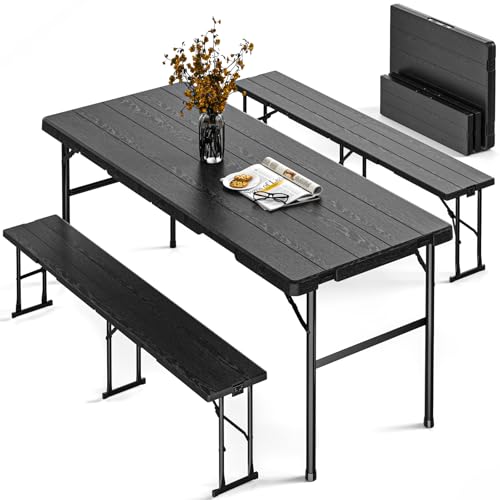
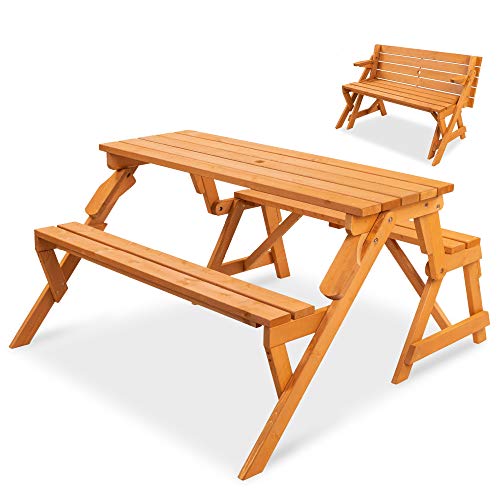
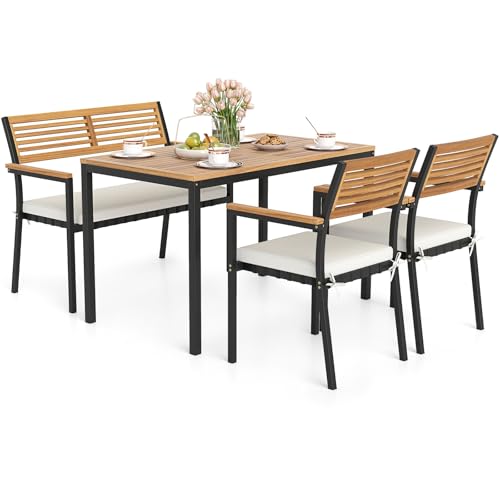
What Is an Outdoor Dining Table with Bench on One Side?
An outdoor dining table with bench on one side is exactly what it sounds like: a dining-height table paired with a long bench along one edge and individual chairs (or stools) along the opposite edge and ends. This mixed-seating layout has become increasingly popular on patios because it balances practical seating density with a relaxed, approachable look.
Unlike a fully benched picnic table, the one-sided configuration keeps the chair side flexible. Guests who prefer back support can take a chair, while children, teens, and casual diners often gravitate toward the bench. If you are still comparing broader layouts, our overview of patio dining sets and outdoor dining furniture sets can help you weigh bench-versus-chair configurations against your space.
Key Benefits of a One-Sided Bench Dining Table
1. Higher Seating Density
A bench can typically seat three adults along a 60-inch span, where the same length might fit only two chairs comfortably. For growing families or households that host frequently, that added capacity matters. If you regularly seat six or more, a bench is often the difference between fitting everyone at one table or splitting the group.
2. Space Efficiency on Decks and Patios
Benches tuck neatly under the table when not in use, freeing up walkway clearance. On smaller patios, this can be the deciding factor. If your space is tight, explore our small patio layout ideas and compact outdoor tables for complementary solutions.
3. Family-Friendly and Casual Atmosphere
Children can slide onto a bench without climbing into a chair, and the shared seating encourages conversation. Many parents prefer the bench side for kids and reserve chairs for older guests who want armrests and back support.
4. Design Versatility
Bench-and-chair mixing breaks up visual repetition. A wooden bench against powder-coated chairs creates pleasing contrast, and the bench can double as a buffet perch or a spot to set down serving trays during parties.
How to Choose the Right Size
Sizing is the most common mistake buyers make. A bench that is too short leaves awkward gaps at the table ends; a table that is too narrow makes bench seating feel cramped.
- Length: Allow 24 inches of table length per seated person on the bench side. A 60-inch table seats two to three on the bench; a 72-inch table seats three comfortably.
- Width: A minimum of 30 inches is workable for two-sided seating, but 36 to 40 inches feels noticeably more comfortable — especially since bench diners cannot slide out as easily as chair users.
- Clearance: Leave at least 36 inches of open space behind both the bench and the chairs for walking and pulling out.
- Height: Standard dining height is 28 to 30 inches. Benches should sit at 17 to 19 inches so knees clear the apron. If you are matching pieces from different sources, verify the bench-to-table height ratio carefully.
For larger households, a rectangular patio dining table with umbrella hole in the 72-inch range is a strong pairing for a one-sided bench setup. If you need seating for six with a more formal feel on the chair side, a patio table and eight chairs layout comparison may help you weigh the alternatives.
Materials: What Works Outdoors
Benches take more lateral stress than chairs because people slide along them. Choose materials that resist racking and weather cycling.
Wood (Teak, Acacia, Eucalyptus)
Teak is the top-tier choice for outdoor benches: naturally oil-rich, dimensionally stable, and increasingly beautiful as it ages. Acacia offers a balanced mid-range option with good density when properly sealed. Eucalyptus sits between the two. A teak outdoor bench is a long-term investment that pairs elegantly with matching table tops. For lower-maintenance alternatives, see our metal bench overview.
Powder-Coated Aluminum
Aluminum frames with powder coating are lightweight, rust-proof, and ideal for humid climates. They are the practical choice for a bench you plan to move for cleaning or storage. Our guide to powder-coated aluminum outdoor furniture explains the coating grades that matter.
Wicker and Rattan
All-weather wicker over an aluminum frame gives a softer, more residential look. It suits covered patios and screened porches better than fully exposed decks. A rattan bench can be a stylish anchor for a one-sided bench dining layout.
| Material | Tier Positioning | Best For | Maintenance Level |
|---|---|---|---|
| Teak | Premium / high-end tier | Long-term outdoor installations | Low (occasional oiling optional) |
| Acacia | Mid-range tier | Balanced durability and look | Moderate (annual sealing) |
| Powder-coated aluminum | Essential to premium tiers | Humid climates, easy movement | Low (wipe clean) |
| All-weather wicker | Mid-range tier | Covered patios and porches | Low to moderate |
Comfort and Ergonomics
A bench looks simple, but its comfort depends on a few details that are easy to overlook in photos:
- Seat depth: 14 to 16 inches is typical; deeper benches feel loungier but push knees into the table apron.
- Edge profile: Rounded or eased front edges reduce pressure on the back of the thighs during long meals.
- Back support: A low backrest (12 to 18 inches) adds meaningful comfort without blocking sightlines.
- Cushion strategy: A thin bench cushion transforms comfort. Tie-on cushions stay put when people slide along the bench.
If comfort is your priority, consider pairing the bench with supportive outdoor dining chairs with cushions on the opposite side so every guest has a comfortable seat.
Styling Your One-Sided Bench Setup
The bench side is a natural focal point. Anchor it with a rug to define the dining zone, add a centerpiece that does not obstruct conversation, and consider lighting overhead. A patio rug under the table visually ties bench and chairs together, while patio lighting or a patio umbrella completes the scene.
If your layout includes a shade structure, a pergola frames the dining area beautifully and can support hanging lights or a fan. For storage during off-season, review our outdoor weatherproofing guide before the first cold snap.
Buying Checklist
Before you commit, run through this practical checklist:
- Measure the patio footprint and confirm 36-inch clearance on all sides.
- Decide bench-only seating versus bench-plus-chairs based on your guest mix.
- Verify table and bench heights (28–30 in table, 17–19 in bench).
- Choose a material matched to your climate and maintenance appetite.
- Check that the bench can be lifted or moved by one person if needed.
- Confirm assembly requirements — bench frames often ship partially assembled.
- Plan cushion sizing before you buy the bench, not after.
If you are furnishing a larger space around the dining table, our guides to outdoor sectional sofas and serving stations and storage cabinets help you build a cohesive, functional patio.
Frequently Asked Questions
Is a bench on one side comfortable enough for guests?
Yes, provided the bench has proper seat depth, a rounded front edge, and optional cushions. Many hosts assign the bench to children and casual guests while reserving chairs for older visitors who need back support and armrests.
How many people can sit on a bench at a dining table?
Allow about 24 inches of bench length per adult. A 60-inch bench seats two to three adults; a 72-inch bench seats three comfortably. Children need less space, which is why the bench is often the flexible side of the table.
Can I use a bench with a round dining table?
It is possible but less practical. Benches work best against straight edges, so rectangular and oval tables are the natural pairings. If you prefer round, consider a round outdoor dining table with swivel chairs instead of mixing in a bench.
Should the bench match the table material?
Matching is safe and classic, but deliberate contrast — a wood bench against a metal table — can look intentional and modern. Just keep finish tones in the same warm or cool family to avoid visual clash.
How do I protect a wood bench in winter?
Clean and dry the bench thoroughly, apply a fresh coat of sealer or oil if recommended by the maker, and cover it or store it in a dry space. Our weatherproofing guide covers seasonal care in detail.
Related Reading
Deepen your patio planning with these focused guides: