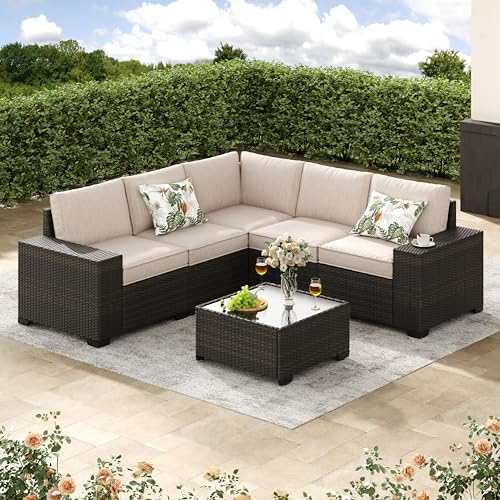
Patio Sectional Sofa: The Complete Buying Guide
Everything you need to know about choosing, arranging, and caring for a sectional sofa that transforms your outdoor space into a true living room.
Start ExploringWhat You'll Find on This Page
Why a Patio Sectional Sofa Belongs in Your Outdoor Space
A patio sectional sofa is more than just a piece of furniture — it is the anchor of your outdoor living room. Unlike individual chairs or small loveseats, a sectional offers generous seating, encourages conversation, and creates a natural focal point on a deck, patio, or poolside area. For homeowners who treat their backyard as an extension of the home, a sectional is often the single most impactful purchase they can make.
The appeal of a sectional lies in its ability to combine comfort with flexibility. Many modern designs are modular, meaning you can rearrange the pieces to suit different occasions — a long L-shape for family movie nights, a U-shape for entertaining guests, or a compact arrangement for everyday lounging. This adaptability is especially valuable in outdoor settings where the layout may need to change with the seasons or with the addition of new pieces such as a patio fire pit or a patio ottoman.
Another key advantage is visual cohesion. A single sectional unifies a patio better than a scattered collection of chairs. When paired with complementary pieces like a patio loveseat or patio lounge chair, the result is a polished, intentional space that feels like a natural extension of your interior design.
Types of Patio Sectional Sofas
Not all sectionals are built the same. Understanding the main categories will help you narrow down the right fit for your space, lifestyle, and climate.
Modular Sectionals
Modular sectionals are composed of individual pieces — corner units, armless chairs, and ottomans — that connect together. This is the most flexible option because you can reconfigure the layout as your needs change. Modular designs are particularly popular in modern outdoor spaces and pair well with patio sectional collections that emphasize clean lines and low profiles.
Fixed L-Shape and U-Shape Sectionals
These are pre-configured sectionals with a fixed frame. They offer a more traditional, furniture-like appearance and are often sturdier than modular pieces. An L-shape works well along two walls or the edges of a deck, while a U-shape creates a defined conversation zone — ideal for larger patios and entertaining areas.
Curved and Rounded Sectionals
Curved sectionals soften the hard edges of a patio and create a natural gathering point. They work especially well around a patio fire table or a patio pool area, where the curved form encourages face-to-face conversation.
Sectionals with Built-In Dining or Storage
Some high-end designs integrate a dining table or storage compartments into the sectional frame. If you frequently host meals outdoors, a patio furniture sectional with dining table can eliminate the need for a separate dining set. Similarly, storage-integrated sectionals are a smart choice for keeping cushions and throws protected — see our guide to patio furniture with built-in storage for cushions.
Materials and Construction
The frame and cushion materials determine how well your sectional will hold up to sun, rain, and temperature swings. Here is a breakdown of the most common options.
| Frame Material | Best For | Key Characteristics |
|---|---|---|
| Powder-Coated Aluminum | All climates, coastal areas | Rust-proof finish, lightweight, durable construction |
| Wicker & Rattan (Natural or Synthetic) | Classic and coastal styles | Warm texture; synthetic versions are more weather-resistant |
| Teak and Hardwoods | Premium and luxury settings | Long-term investment, natural aging, requires periodic sealing |
| High-Grade Steel | Heavy-duty and commercial-grade use | Solid build, reinforced joints, often paired with rust-resistant coatings |
| Resin and Plastic | Entry-level and starter tier | Lightweight, easy to move, limited longevity in harsh sun |
When evaluating frames, look for reinforced joints, welded corners, and a weather-resistant coating. A premium sectional will typically use thicker gauge aluminum or fully welded frames, while entry-level models may rely on bolted connections that loosen over time. The difference between mid-range and high-end tier often comes down to the quality of the finish and the precision of the joinery.
For a broader comparison of frame types across all outdoor seating, see our patio furniture hub and the patio seating category guide.
Sizing and Layout Planning
Before you shop, measure your space carefully. A sectional that is too large will crowd the patio and block walkways; one that is too small will leave the area feeling unfinished. As a general rule, leave at least 18–24 inches of clearance around the sectional for foot traffic, and ensure there is a clear path to doors and steps.
Standard Dimensions to Know
- Seat height: 16–18 inches is comfortable for most adults; deeper seats (25+ inches) suit lounging.
- Seat depth: 22–25 inches for upright seating; 28+ inches for a lounge-style feel.
- Corner unit: typically 32–36 inches square.
- Total length: a three-piece L-shape often spans 90–120 inches per side.
Layout Tips for Different Patios
On a long, narrow deck, place the sectional along the longest wall and add a patio end table at each end. On a square patio, an L-shape in one corner leaves room for a patio dining table or a patio fire pit in the open area. For balconies, modular sectionals that can be split into separate seating groups are the most practical choice — see patio furniture sets for apartment balconies.
Popular Configurations
The right configuration depends on how you use your patio. Here are the most common setups and who they suit best.
L-Shape with Chaise
Ideal for lounging and napping. The chaise section adds a daybed-like feel without the footprint of a full patio daybed. Great for poolside patios and sunbathing areas.
U-Shape Conversation Layout
Best for entertaining. A U-shape wraps around a coffee table or fire feature, creating an intimate conversation circle. Pair with patio conversation sets if you want a coordinated look across the whole seating area.
Sectional with Swivel Chairs
Combining a sectional with patio conversation sets with swivel chairs gives you the best of both worlds: a fixed anchor sofa plus flexible seating that can turn toward the view, the fire, or the dining area.
Sectional with Rocker Chairs
For a relaxed, family-friendly vibe, consider patio conversation sets with rocker chairs. The gentle motion is soothing and works well on porches and decks.
Sectional Without Cushions
In humid or rainy climates, patio conversation sets without cushions are a practical choice — they dry faster and require less maintenance. You can always add separate patio furniture seat cushions later.
Cushions, Fabrics, and Comfort
Cushions are where comfort lives, and they are also the most vulnerable part of any outdoor sofa. Choose wisely.
Fabric Types
- Solution-dyed acrylic: The gold standard for outdoor upholstery. Resists fading, mildew, and stains.
- Polyester blends: More common in mid-range pieces. Look for UV-treated versions for better longevity.
- Olefin: Excellent moisture resistance and colorfastness; often used in high-end tier sectionals.
Foam and Fill
High-density foam retains shape better than low-density alternatives. Quick-dry foam is a worthwhile upgrade for humid climates because it allows water to drain and air to circulate. Some premium sectionals use wrapped foam cores with a soft fiber layer for a plush yet supportive feel.
Replacement and Upgrades
Even the best cushions wear out eventually. If your frame is still solid, replacement cushions are a cost-effective way to refresh the look. Browse patio furniture replacement cushions and patio cushions on sale for seasonal options. When not in use, store cushions in a patio cushion storage box or a patio covering to extend their life.
Care and Weatherproofing
A patio sectional is an investment, and proper care will keep it looking and feeling great for years. The routine depends on your climate and the materials you choose.
Routine Maintenance
- Brush off debris weekly and wipe frames with a damp cloth.
- Clean cushion covers according to the manufacturer's instructions; most solution-dyed acrylics can be machine-washed on a gentle cycle.
- Check and tighten bolts and connectors at the start of each season.
- Apply a protective sealant to wood frames annually.
Weather Protection
If your patio is exposed to the elements, a quality patio furniture cover is essential. For year-round exposure, consider patio furniture that can be left outside in the winter. Aluminum and synthetic wicker handle cold better than natural wood or resin. If you live in a snowy region, storing cushions indoors during winter is strongly recommended.
Long-Term Durability
Models in the premium and luxury tiers are built with replaceable components and higher-grade materials, making them easier to maintain over a decade or more. Entry-level and starter-tier sectionals may need more frequent cushion replacement and frame touch-ups. For a full maintenance roadmap, see our patio essentials checklist.
How to Choose: A Step-by-Step Approach
Follow this sequence to make a confident decision without second-guessing yourself.
- Measure your space. Note the dimensions of your patio, doorways, and any obstacles such as railings or planters.
- Define your primary use. Is this for lounging, dining, entertaining, or a mix? Your answer determines the configuration.
- Choose your material tier. Match the frame material to your climate and maintenance preferences.
- Select a configuration. Modular for flexibility, fixed L-shape for stability, U-shape for entertaining.
- Evaluate cushion quality. Prioritize solution-dyed acrylic and high-density foam.
- Plan for storage and covers. Budget time and space for cushion storage and a protective cover.
- Compare brands and warranties. Use our patio furniture brands guide to shortlist reputable makers.
Ready to explore specific models? Browse our curated patio sectional recommendations and compare features side by side. You can also check patio furniture deals for seasonal availability.
Frequently Asked Questions
How do I know if a sectional will fit my patio?
Measure the length and width of your patio, then subtract 18–24 inches of clearance on all sides. Compare that usable area to the sectional's footprint. Use painter's tape to outline the shape on the ground before you buy.
Can a patio sectional stay outside all year?
It depends on the material. Powder-coated aluminum and synthetic wicker are generally fine year-round with a cover. Natural wood requires more care, and cushions should be stored or covered during harsh weather. See our guide to patio furniture that can be left outside in the winter for details.
What is the best fabric for outdoor sectional cushions?
Solution-dyed acrylic is the most fade-resistant and mildew-resistant option. Olefin is a strong alternative for moisture-prone areas. Avoid untreated cotton or linen, which degrade quickly outdoors.
How many people can a typical sectional seat?
A standard three-piece L-shape seats 4–5 adults comfortably. A larger U-shape or a sectional with a chaise can seat 6–8. Always check the manufacturer's seating capacity and consider the size of your guests when planning.
Should I choose modular or fixed?
Choose modular if you like to rearrange furniture or anticipate moving. Choose fixed if you want maximum sturdiness and a traditional look. Both are available across entry-level through luxury tiers.